

Recovering from infertility issues is an essential step toward conceiving a baby or achieving parenthood with the assistance of IVF specialists or doctors in India. Nowadays, many new couples or single parents face infertility due to medical conditions or unhealthy lifestyle choices. Factors such as excessive consumption of fast food, alcohol, smoking, drug use, unnecessary medications, and other harmful habits can negatively impact the reproductive system. In such cases, Donor Egg or Donor Sperm IVF can be a viable solution to help individuals or couples fulfil their dream of having a child.
For couples or single people looking to start a family, donor eggs or donor sperm may be good choices when medical issues prevent natural conception. When a woman is too old, has ovarian problems, or has a genetic abnormality that prevents her from producing healthy eggs, donor eggs are usually used. Using in vitro fertilisation (IVF), a healthy donor’s eggs are fertilised with the donor’s or partner’s sperm to produce embryos, which are subsequently placed inside the recipient’s uterus.
However, donor sperm is used when a lesbian couple or single woman wants to conceive, or when a male partner has reproductive problems like low sperm count, poor sperm motility, or genetic abnormalities. Through intrauterine insemination (IUI) or IVF, the woman’s eggs are fertilised using the donor sperm. To guarantee the process’s safety and success, both choices entail a comprehensive screening of the donors for genetic disorders, medical histories, and general health.
Can You Use Both The Donor Egg Or Donor Sperm? – Donate Egg For Money In India
Both donor sperm and donor eggs can be used in fertility treatments, yes. When neither couple can contribute their genetic material because of infertility, health concerns, or personal preference, this method is frequently used. In these situations, in vitro fertilization (IVF) is used to fertilize eggs from a healthy donor with sperm from a donor.
To establish pregnancy, the resultant embryos are subsequently placed in the uterus of the intended mother or a surrogate. Using both donor sperm and donor egg can help same-sex couples, single people, or couples where both spouses struggle with infertility. To guarantee the procedure’s safety and quality, donors are thoroughly examined for medical history, genetic disorders, and general health. With a high success rate and the potential for a healthy pregnancy, this approach enables individuals or couples to enjoy the benefits of motherhood even in situations where natural conception is not feasible.
What Is The Difference Between Donor Egg & Donor Sperm? – Is Egg Donation Painful?
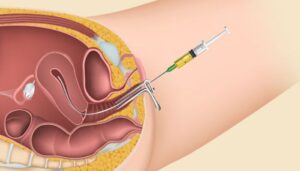
Is Egg Donation Painful
The primary difference between egg and sperm donors lies in their biological contributions and the processes involved in donation.
An egg donor is a woman who provides her eggs (oocytes) for use in fertility treatments, such as in vitro fertilization (IVF). This process typically involves ovarian stimulation with hormonal medications to produce multiple eggs, followed by a minor surgical procedure to retrieve the eggs from the ovaries. Egg donation is often used when the intended mother cannot produce healthy eggs due to age, medical conditions, or genetic concerns.
On the other hand, a sperm donor is a man who provides his sperm for use in fertility treatments, such as intrauterine insemination (IUI) or IVF. Sperm donation is a less invasive process compared to egg donation and typically involves collecting semen through natural ejaculation.
Sperm donation is commonly used when the intended father has low sperm count, poor sperm quality, or genetic disorders, or when there is no male partner in the case of single women or same-sex female couples.
Can You Choose Gender With Sperm Donation In India? – Gametes Donation Ethics

Sperm Donation In India
According to the Pre-Conception and Pre-Natal Diagnostic Techniques (Prohibition of Sex Selection) Act, 1994 (PCPNDT Act), it is illegal and severely forbidden to choose a baby’s gender by sperm donation or any other method in India. This law was passed to address female infanticide, the nation’s falling sex ratios, and gender-based discrimination.
For non-medical reasons, it is prohibited to choose a child’s gender through medical procedures like sperm sorting or preimplantation genetic testing (PGT) in IVF. Only genetic abnormalities associated with a certain gender can be diagnosed using these procedures, and even then, they must be justified medically and are subject to strict limitations.
These legal limits must be followed by couples or individuals seeking fertility procedures, such as sperm donation. In India, fertility clinics are required to adhere to ethical standards and are not permitted to promote or facilitate gender selection in any way. Serious consequences, such as jail time and fines, may be imposed on those who violate these regulations, including medical professionals.
What is the Donor IVF Success Rate in India?
In donor IVF, a healthy donor’s egg or sperm is used. Because donor eggs come from young women with no medical issues, success rates are higher than regular IVF. Most couples have a strong chance of pregnancy in the first or second attempt.
What are the ICMR Figures in India?
According to the Indian Council of Medical Research, the success rate of donor-egg IVF in India is 50-60% per cycle. That is much higher than using your own eggs. Since clinics now have to report their results under the ART Act 2021, you can trust these numbers more than before.
- Donor egg IVF success rate up to 60% per cycle
- Self-egg IVF comparison success rate 35–40% per cycle
- Regulated clinics are prone to report better, with the best numbers
- Success depends on clinic quality and lab standards
What CDC and Global benchmark figures say?
In the US, CDC stats show a live birth rate of about 55.9% for fresh donor egg transfers, while frozen transfers sit at 40.2%. Indian clinics and medical studies often use these figures too.
- Fresh donor egg transfer with 55.9% live birth rate
- Frozen donor egg transfer 40.2% live birth rate
- These are live birth rates, not just pregnancy rates
- India’s top clinics report comparative numbers
What are the Donog Egg Success Rate by Age Group?
Here is the thing: when you use your own eggs, your age plays an important role in success, but when using donor eggs, results are different and positive. So even if you are over 40, your chances with donor eggs stay high.
- Below 35 years of age (recipient): 55–60% success rate
- 35–40 years, 50–55% success rate
- 40–45 years success rate up to 55%
- Above 45 years, the success rate is up to 50%
- The donor is typically aged 21–30, keeping egg quality consistently high
What is the success rate of Fresh Vs Frozen Egg Transfer?
Fresh transfers use donor eggs right after they are retrieved; frozen transfers store eggs or embryos to be used later. Both options work well, but fresh transfers have a slight advantage in success rates.
- Fresh transfer success rate up to 55–60%
- Frozen transfer success rate up to 40–50%
- Frozen transfers offer more flexibility and planning time
- Freezing technology (vitrification) has improved frozen success rates significantly
- Frozen transfers reduce the risk of ovarian hyperstimulation in donors
- Most Indian ART banks now use frozen donor eggs as the standard
What Is The Cost Of IVF Donor Egg? – Costs Of IVF Donor Egg

Cost Of IVF Donor Egg
Egg donor cost in India. Depending on many variables, IVF cycles using donor eggs in India can cost anywhere from ₹2,50,000 to ₹4,50,000. This cost covers the expense of obtaining the donor egg, the egg donor’s compensation, medical treatments, fertility drugs, and lab fees. However, the precise price could change depending on the procedure’s intricacy, the clinic’s reputation, and its location.
Some clinics offer financing options or EMI plans to make the treatment more affordable. Couples can also explore clinics that provide package deals, which may include multiple IVF cycles at discounted rates.
What are the Donor IVF Regulations in India Under the ART Act 2021
India rolled out the Assisted Reproductive Technology Regulation Act in 2021 to bring some order and safety to donor IVF. Basically, it lays down the law of egg/sperm donation so everyone, donors, recipients, and the kids born through donation, knows their rights and responsibilities.
Who can donate an egg?
If a woman wants to donate eggs, she needs to be between 23 and 35, in good shape physically and mentally, and must already have at least one child. She can donate eggs up to six times in her life, no more.
- Age limit is 23 to 35 years
- Must already have one living child of her own
- Can donate eggs a maximum of six times in her lifetime
- Must pass medical and genetic screening tests
- Cannot be a close relative of the recipient couple
Who can donate and Sperm?
For sperm donation, men need to be aged between 21 and 45. They have to be healthy and not carry any genetic diseases. Each man’s sperm can only help produce one child; that is the limit.
- Age limit is 21 to 45 years
- Must be medically fit and free from genetic disease
- Sperm from one donor can result in only one live birth in India
- Semen is kept in the lab for six months before use
- Regular health and infection screening is mandatory
ART bank requirement
ART banks are the official, government-approved places where donor eggs, sperm, and embryos are stored and supplied. These banks cannot operate unless they are licensed by the National Registry of ART and Surrogacy, and both have to follow the strict rules about how they store, test, and document everything.
- Must be registered with the National ART and Surrogacy Registry
- Required to test all donors for HIV, Hepatitis B, Hepatitis C, and other infections
- Must maintain detailed records of every donor and every donation
- Sperm samples must be stored in quarantine for six months before release
- Banks cannot operate without a valid government licence and regular inspections
Consent Form and Legal Framework
Both donors and recipient couples have to sign the consent forms before anything proceed. These documents lay out all the medical details and legal rights, so everyone’s clear about what they’re getting into. No one can donate without putting it in writing no exceptions.
- The donor must sign a consent form to donate without future claims on the child
- The recipient couple must sign a consent accepting full parental responsibility
- A registered legal agreement is made between the donor and the ART bank
- The fertility clinic must keep all signed consent forms on record
- Consent can be withdrawn by the donor before the actual egg or sperm retrieval takes place
Final Wording – Donor Egg Or Donor Sperm
The conclusion is a final destination where the authors conclude all essential aspects of the main topic or its components. We hope that you understand the factors that contribute to the infertility of couples or single parents who are seeking fertility treatment to get rid of sterile issues.
Read more articles on our official website, for instance, www.worldfertilityservices.com where you can share your unique experiences or thoughts after your successful fertility treatment with us. Your contribution will assist our needy patients to conceive a baby through fertility treatment.
Frequently Asked Questions:
Donor IVF is totally legal in India. The government set this straight with the ART Regulation Act in 2021, so it is official and tightly regulated. Only clinics with proper registration and licensed ART banks can handle donor IVF.
If you are thinking about donor egg IVF, you are looking at about 2.5 to 4 lakh rupees per cycle. That covers donor fees, meds, egg retrieval, lab work, and embryo transfer. The price swings based on the city, the clinic, and how many tries you need.
You get to tell the ART bank what you are hoping for, things like skin tone, height, blood group, or educational background. They will do their best to match you with a donor who fits your preferences. But you will never get the donor’s name or any of their personal details.
Here is how it works: In donor egg IVF, a healthy woman donates her eggs, which are fertilised in the lab and then placed in the recipient’s uterus. With donor sperm IVF, a man donates his sperm, which fertilises the woman’s own eggs.
Donors in India have to clear some serious hurdles. They go through medical, genetic, and psychological screening, which means blood tests, infection checks, hormone tests, and digging into their family medical history. If they do not pass every step, they do not donate. Only healthy, fully vetted donors make the cut.

Devender Gill is an experienced medical blogger & writer on the healthcare researcher with a strong focus on numerous treatments based on the official info from clinics aross network. He Specializes in creating accurate, easy-to-understand medical content covering, medical topics, for instance, IVF, Surrogacy, IUI, ICSI, and other essential ones.
Table of Contents
 WhatsApp us