

The moment you decide to see a fertility specialist can feel heavy. You might feel a mix of hope, anxiety, and exhaustion from months of trying on your own. Booking that your first visit / fertility consultation is a huge step, but the days leading up to it can leave you feeling lost. The goal of this meeting is to stop the guessing game and get a clear picture of your path forward. A solid First Fertility Consultation Checklist for Couples ensures you walk into that office ready to talk, not just wonder what you should have brought.
Being prepared changes the dynamic of the meeting. Instead of scrambling to remember dates or details, you can focus on the advice your doctor provides. This preparation transforms your anxiety into organized, actionable information.
Pre-Appointment Paperwork & Medical History Compilation – First Visit / Fertility Consultation
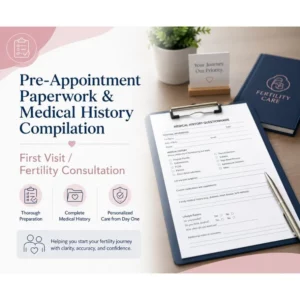
Pre-Appointment Paper Work & Medical History Compilation
Clinics rely on data to build your profile. The more accurate your records, the better they can pinpoint potential issues. You are essentially building a map of your reproductive health for the doctor to review.
Documenting Personal & Partners Health Records For Better Out Source
Do not assume the clinic will have everything from your primary care doctor. Gather paper or digital copies of records for both partners. You need to provide a clear picture of your medical background. Bring the following items:
- Any past surgical reports, especially those involving the reproductive organs or pelvic area.
- A list of all current medications, including the exact dosage, how often you take them, and how long you have been using them.
- Reports on any chronic conditions, such as thyroid issues, diabetes, or autoimmune disorders.
- Family history of reproductive issues or early menopause.
Having these documents on hand prevents delays. If a doctor has to request records after the visit, it creates a gap in your timeline. Bring everything with you on day one.
Reviewing Menstrual & Cycle Tracking Data For Highest Conception Ratio
If you have been tracking your cycle, bring those logs. Aim for at least 12 months of data if you have it. This information is vital for the specialist to understand your ovulation patterns and potential hormonal irregularities. Include details such as:
- The start date and length of each cycle.
- Basal body temperature (BBT) charts if you have recorded them.
- Notes on any ovulation predictor kit (OPK) results.
- Observations on cycle symptoms, like heavy cramping or mid-cycle spotting.
Consistency is key. If your tracking was sporadic, that is fine. Simply bring what you have. This data helps the doctor determine if they need to adjust the timing of your initial blood tests.
Preparing A Detailed Sexual History Questionnaire With Trusted IVF Clinic
This part might feel awkward, but it is necessary. The specialist needs to understand your sexual habits to rule out mechanical or timing issues. Be prepared to answer questions honestly about:
- The frequency of intercourse and how often you time it with your fertile window.
- Whether you use lubricants and what type, as some products can affect sperm motility.
- Any history of sexually transmitted infections (STIs), as past infections can sometimes cause scarring or blockages.
- Any known history of sexual dysfunction for either partner that makes regular intercourse difficult.
Your doctor has heard all of this before. There is no reason to be embarrassed. Honesty here saves time and prevents the team from going down the wrong diagnostic path.
Question To Ask The Fertility Doctors Question Before Procedure

Question To Ask The Fertility Doctors
You will likely feel overwhelmed during the appointment. It is common to walk out of the room and immediately remember a question you forgot to ask. Using a list keeps you grounded.
Question Regarding Diagnosis & Testing Timeline For Clearance
Your first goal is to find out what is going on. Ask about the standard testing protocol. You need to know what to expect in the coming weeks. Ask these questions:
- What specific tests do you recommend for us right now, such as semen analysis, Day 3 bloodwork, or an HSG?
- How long does it take to get these results back?
- Do any of these tests need to be done at a specific time in my cycle?
- Are there any non-invasive tests we should try before moving to more intensive procedures?
Getting a clear timeline helps you plan your life. It turns a vague, open-ended wait into a defined schedule of appointments.
Understanding Procedure Option & Success Rates
Once you have a baseline, the conversation turns to what to do next. Do not wait for the doctor to simply tell you what to do. Engage them in the decision-making process. Ask:
- Based on our specific test results and profiles, what are the top two recommended paths?
- What is the difference in success rates between these options for couples with our history?
- How aggressive do we need to be in our approach right now, given our ages and test data?
Knowing the statistical likelihood of success for different treatments helps you make informed choices. It moves you away from hope and into strategy.
Logistics, Costs, Insurance Coverage Is Essential Before Procedure
Fertility treatment is a significant investment. You need to know the financial reality before you commit to a plan. Be direct about your budget and insurance. Ask for the following:
- Does our insurance cover the initial diagnostic tests, or are they out-of-pocket?
- Can you provide a list of expected costs for the next three months of potential treatments?
- Does the clinic have a financial coordinator who can help us understand our specific coverage?
- Are there additional costs for things like anesthesia, specialized labs, or medication markups?
Having these answers helps you manage the stress of the financial side. You do not want money worries to distract you from your physical health.
Essential Information Gathering For Borth Couples – IVF For Both & Single
The evaluation process involves two people. One partner cannot carry the weight of the preparation alone. Ensure you are both fully involved in the information gathering.
Male Fertility Checklist – Lifestyle & Prior Testing – IVF
Male factor infertility is a common component in many cases. The male partner needs to be ready to discuss his health openly. Compile these details:
- History of any fevers, surgeries, or injuries to the groin area.
- Recent habits that involve heat exposure, such as hot tubs, saunas, or wearing tight-fitting underwear.
- Use of any substances, including protein powders, steroids, or high-dose testosterone, which can stop sperm production.
- A copy of any previous semen analysis results, even if they were done years ago.
If the male partner has never had a semen analysis, make sure he knows this is likely the first order of business. It is a simple, non-invasive test that provides a massive amount of data.
Female Fertility Checklist – Surgical History & Contraception
The female partner has the most intensive testing schedule. You need to provide a clear timeline of your reproductive history. Keep these points organized:
- A list of all birth control methods used and the exact date you stopped using them.
- A timeline of any past gynecological surgeries, including procedures for endometriosis, fibroids, or cysts.
- Details on any known conditions that cause pain or irregular cycles.
- Information on any past pregnancies, miscarriages, or complications.
The doctor will use this to decide if you need a physical exam or an ultrasound during the first visit. Being able to explain your history clearly saves time and improves accuracy.
Lifestyle Factors Impacting Fertility
Your daily habits affect your egg and sperm quality. The clinic will ask about these factors, so be ready to discuss them without hiding anything. This includes:
- Tobacco, nicotine, or vape usage for both partners.
- Alcohol consumption patterns.
- Daily caffeine intake.
- Current exercise routines and diet.
The doctor is not judging you. They are looking for factors that might be hurting your chances of conception. If you smoke or drink, tell them. They can provide resources or advice on how these habits impact your goals.
Sightedness The Clinics Environment & Next Steps In Procedure

Sightedness The Clinic Environment Next Step In Procedure
The clinic you choose will be part of your life for a while. You need to make sure the environment feels right for you. It is more than just clinical skill; it is about how they handle the human side of this experience.
Evaluating Clinic Communication Style & Philosophy
How does the staff treat you? You should walk away from the consultation feeling heard. Pay attention to the doctor’s style during the visit. Do they answer your questions directly? Do they explain things in a way that makes sense to you? If you feel rushed or dismissed, pay attention to that feeling. This is a high-stakes relationship. You need to feel comfortable asking hard questions throughout the process.
Scheduling Subsequent Monitoring & Diagnostic Appointment
Before you leave, have a plan for the next few weeks. Do not leave the office without knowing what comes next. Make sure you walk out with:
- A list of appointments for your required blood draws and ultrasounds.
- Clear instructions on when you need to call the office with your cycle start date.
- Written documentation on whether you need to be fasting for any upcoming tests.
Getting these dates on the calendar immediately reduces the mental load. You want to know exactly what you need to do next to move your plan forward.
Identifying Key Support Staff
You will talk to nurses and coordinators more often than you talk to the doctor. Ask who you should contact for different types of questions. Know the point of contact for:
- Daily clinical questions or concerns about medication.
- Scheduling issues or test result updates.
- Billing, insurance claims, and financial questions.
Knowing who to call for each issue helps you get answers faster. It makes the day-to-day management of your treatment feel more manageable.
You arrived at this appointment looking for answers, and with this preparation, you will leave with a path. By bringing your records, asking specific questions, and getting a clear plan, you have taken control of the situation. You are not just a patient; you are an active participant in your reproductive health. Keep your documentation in a folder or a shared digital drive. Refer to it as you move through your tests and treatments. You have set a strong foundation for the work ahead. Take a breath, trust the plan you built, and take the next step.

Devender Gill is an experienced medical blogger & writer on the healthcare researcher with a strong focus on numerous treatments based on the official info from clinics aross network. He Specializes in creating accurate, easy-to-understand medical content covering, medical topics, for instance, IVF, Surrogacy, IUI, ICSI, and other essential ones.
Table of Contents

 WhatsApp us